
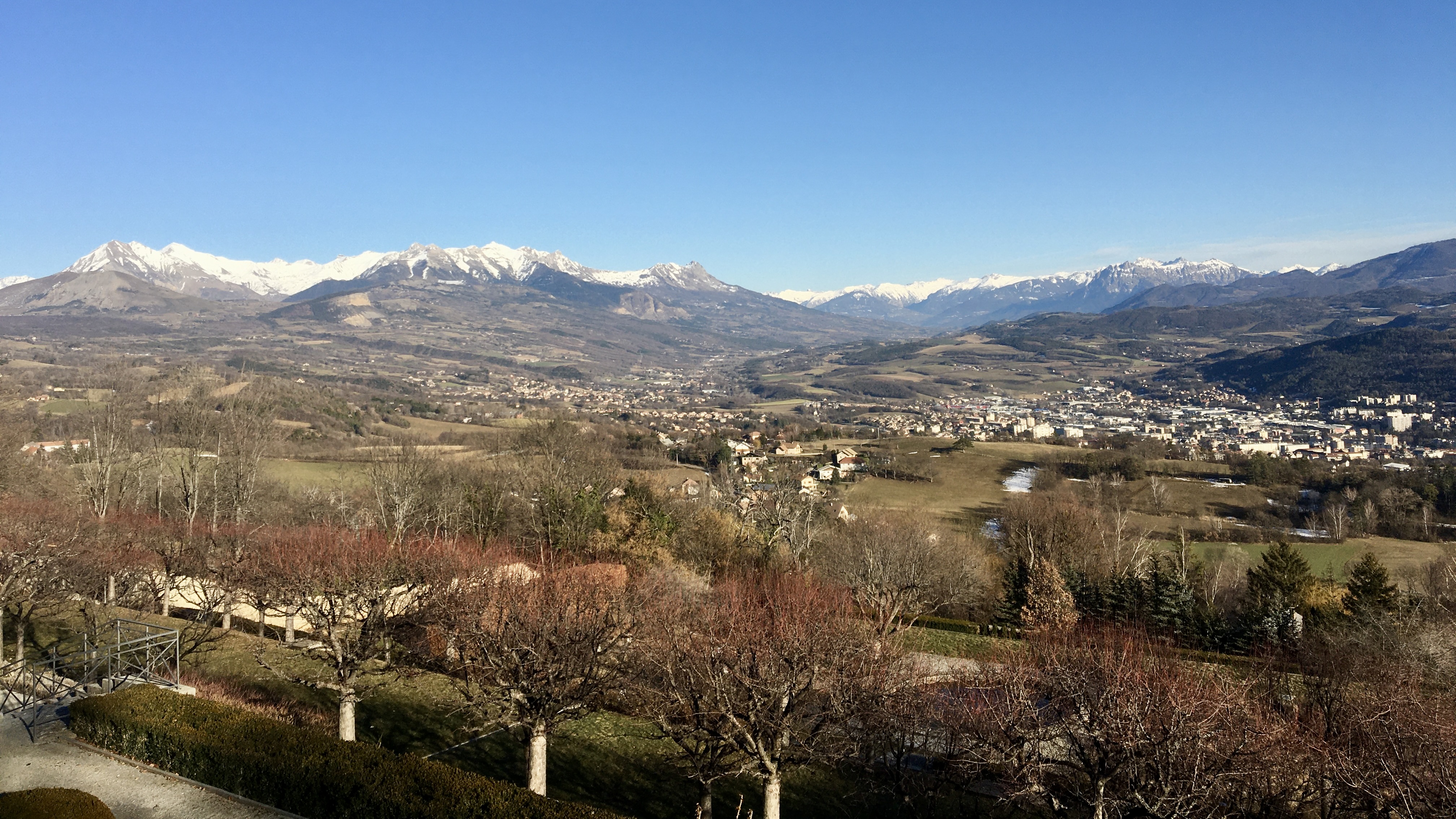
Editor’s note: Sam Toperoff, who died in June at the age of 90, wrote this piece earlier this year as a sequel to “In The Land of the Very Old,” a Sunday Long Read Original essay published in January. That piece, enormously popular with SLR readers, was Sam’s way of delivering his observations and wisdom on aging in a clever, thoughtful format. Following the reception of that piece, Sam put together additional thoughts in this essay, which The Sunday Long Read team has lightly edited and is publishing here as a tribute to our friend, Sam.
1. Calling Dr. Toperoff, or The Taste of Chocolate
A writer fully engaged in a project does not sleep well. Ideas, some of them crazy, percolate and won’t let you turn down the heat. It’s usually about two in the morning. You wonder if it’s even an idea worth losing this much sleep over, but there’s not much you can do about it. Finally the question becomes, Do I get out of bed, go over to the desk and write it down?
I just did. I’ll see what I wrote and try to make sense of it in the morning. Unless I get another troubling thought…
So I finally got to my desk and read what I had scrawled last night. In a hand I could barely read, I had written: “Hey, look at me, Ma. I’ve become a gerontologist.” I smiled, of course, sat down and stayed there. What sounded crazy at 2 A.M. made perfect sense to me eight hours later. I looked the word up, just to be sure I had used it correctly: “Gerontology…the study of the social, cultural and personal aspects of aging, often requiring specialized analytical skills.” The line I had written was a reaction to the fact that I had received an enormous response to my first essay in The Sunday Long Read.
I’ll reset the scene. It’s late winter, a gray day here in the mountains, and I’ve just come back to my desk again after filling blue Ikea bags with kindling snapped from branches that have fallen from our huge beech tree. We heat the entire house with a Scandinavian wood-burning stove and gathering kindling gives me a chance to stretch my muscles and think clearly: All writing starts with thinking. I also know that tomorrow, because of my kindling effort, my ankle or back or shoulder will ache because…well, that’s the way it is at 90.

Let me first talk about me as a gerontologist. I tried to make some sense of the idea, since I had no such medical or psychological credentials, no training of any sort. All I’ve really got is an ability to write personally and clearly about how my life changed—mostly for the better—after I reached the age of 80 and settled with my family into a house in the French Alps, crossing international borders at the same time I crossed a chronological border into the Land of the Very Old.
I have since taken on the headwinds and managed to tack past 90. And what else could I possibly need to write convincingly and authoritatively on the subject of getting really old? I am the subject—an ancient, still sentient and relatively healthy human being! How rare is it that the subject of a study gets to study himself? This summer, when I turn 91, I’m thinking of getting a visa to the Land of the Very, Very Old to gather new material.
So in a sense this restart, this continuation, gives me an opportunity to clarify and emphasize ideas I don’t think I may have dealt with well enough the first time around. I’m grateful for that. Not many people, let alone old writers, get that second chance.
What I had originally discovered in becoming very old seemed important to me: I wasn’t just getting older and older, I was getting older differently, especially when I passed into my 80s. I wrote that I had crossed into what seemed a different land—the Land of the Very Old. I must have struck a chord because I received hundreds of emails from other old humans telling me I had hit on a truth.
I made sure to make clear that in this new land there remained for me some wonderful possibilities and all things considered, it was a pretty good place to live and that I had discovered a great many things that made me very happy. And I heard not just from people who had crossed the border, but from those approaching it and also from some very wise young souls still quite a distance away.
Almost nothing in this complicated land is quite what it first appears. Everything that had been assured and so simple before—getting dressed, shopping, walking the dog, threading a needle, chopping wood, showering, you name it—seems now to have unexpected consequences, unpleasant surprises. Ladders, for example, are a special danger, as is getting in and out of a car, even a big one, turning off the stove, finding your keys—no, forget that one, that’s never been easy.
As a result, in this loopy Land, you must almost always keep your wits about you even when performing the most familiar tasks. Nevertheless, to the very end, this is the life in which we must find and discover value; to do that, we must learn to live cleverly. Yep, as Jimmy Buffet said, “Growing old is not for sissies.” I would add, it’s not for dummies either. Of all the bodily organs you’ll need to meet the requirements of living well in this new country, your brain is by far the most important.
If, like me, you enjoyed Forrest Gump and accept his famous dumb/wise simile, “My mama always said life is like a box of chocolates—you never know what you’re gonna get,” you’d be smart, in the Land of the Very Old, to alter your taste in chocolate. The sweet chocolate of your youth had better give way to a far more mature and subtle taste: the intriguing, layered savor of the bittersweet. It is, metaphorically speaking, one of the more important adjustments you will be asked to make here.
Here in the Land of the Very Old, the bitter is really not so terribly bitter, the sweet, when it comes, is surely a good deal sweeter than it has ever been.
Actually, now that I think about it, DUMB/WISE is what got stamped in capital letters on my passport when I entered the Land of the Very Old.

2. The Mind/Body Problem, or My Plastic Brain
So far I’ve not really gone into detail about my own state of health, so this may be a good time to perform my own “organ recital,” as a dear friend used to call it. Needless to say, in this Land almost all our working parts have gotten rusty; diminishment thy name is aging, so the full recital is not necessary, but I would like to talk a bit about the wearing down of my brain, my actual organic brain, not the small, adobe red, plasticized model I just took down from the shelf above my desk and am holding in the palm of my right hand as I type lefty, just to impress myself (and you, perhaps).
Here’s how I remember my own brain beginning to betray me: When I was a university professor and I was presenting a new novel to the class, I would read the book a second time, get some thoughts down on a small sheet of paper, walk into the class and the deliver a lecture from those notes, often making new connections on the fly between my ideas and even developing interesting motifs as I went along, like an accomplished jazz player riffing on new themes I had discovered in an old standard. I was a good player, a very good lecturer. I always respected the material, the author’s intent, had a very good memory that allowed me to recall salient biographical details, and liked to speak in front of serious students. I barely needed to look at my notes. Then, sometime in my mid-50s, I noticed the slightest hesitation creep in, a distant and very slight quaver of uncertainty. But I knew I was still a very good musician and could manage to get my thought-melody across pretty effectively one way or another.
Then, very slowly over the next three or four years, the uncertainty grew to the point where, when I began a particularly important sentence, my brain told my mind I might not have the exact words I needed to finish the thought correctly. Fear began to quickly compound what might have been a manageable intellectual problem. I noticed often when I approached the end of my thought, I had to use five or six words instead of the perfect word I knew existed but could not conjure up. Even when I was not teaching, in discussions with friends, for example, it was increasingly hard for me to find le bon mot.
I did not have these problems when I wrote, so I resigned from my tenured university post and found work writing for magazines and eventually writing and directing television documentaries. During those TV years, the problem rarely came up.
Now, fast forward to my 80th birthday and crossing the border into the Land of the Very Old. Since I write the first draft of these essays in long hand, I often come to a point where I know there is the perfect word thematically and stylistically, but it does not come, damn it, it does not come, so I leave a space and fill it with a question mark.
Fifteen minutes later, or the next day, the word will find me, but unless I write it down immediately, it will escape again. When this sort of continuous forgetfulness first happened, I’d stop and search my mind, frustration building. Every once in a while the word came by dint of exaggerated and bizarre mental associations but success was rare. Of course, if I had worked on a computer for the first draft, a search would bring it to me fairly quickly, but I remain too stubborn for that.
When I finally go on the computer to type a middle version and edit the essay at the same time, it’s my fingers that now betray me; they do not respond to my mind as they used to not that long ago, choosing to reverse letters often and unwittingly type type type type the same word repeatedly. No matter, I tell myself blithely now, I’m still writing and publishing, still meeting my friends at the cafe, discussing our work and our worlds, telling ourselves we still matter, because we do, at least to ourselves.
In the Land of the Very Old we talk about our brains a lot because in almost every case they don’t work quite as well as they used to, they malfunction in highly curious and often comic ways. Almost nothing in the body works as well. Enter stage left the French philosophe Rene Descartes, whom I first met in Mrs. Kimmel’s Social Studies class when I was a sharp, gangling basketball player of 14.
The name Descartes should ring a bell. Remember Cogito ergo sum? I think therefore I am. So one day Mrs. Kimmel starts the class cold with this question on the blackboard: “How do we know we exist?” And naturally she calls on me because I’m the clever kid and also the class clown. I say, “Because you didn’t mark me absent.” It gets a great laugh, but when I thought about the question later on the school bus home, I was actually grateful to Mrs. K. and the Frenchman for settling that matter once and for all. I didn’t discover until a great many decades later that Descartes had unsettled a great many deeper thinkers than me: Monsieur Descartes had created the famous (or infamous) Mind/Body problem.
Until Descartes, Western philosophers, ever since their origins in ancient Greece, generally accepted the fact that the mind and the body were a single entity—You were because you were! The fully complete self was a given. Thinking was as natural a bodily function as breathing or taking a pee, as much a part of the singular self as your pulse, your vision, a sneeze. There was always and only “the Self.”
Monsieur Descartes changed all that. Like splitting the atom, he split the self in his Discourse on the Method in 1637, and Western thought hasn’t been the same since. Philosophically and practically there were now two of us to take care of.
Clearly the mind is not the brain, but just as clearly, the two must be related, we just don’t know how. About that plastic brain on my desk, my mind can’t remember how I acquired it, so I pick it up again and realize, first, that it’s ugly as hell, then that it very accurately reproduces and labels the various sections—prefrontal cortex, cerebellum, hippocampus, etc.—and that I have no idea at all of how any of them work. Nothing physical connects it to what we call the mind, but we know the two communicate. We can feel it. Don’t we?
Because my mind, unlike Descartes’, has always liked to wander, I come at last to the main point of this essay.
Since I and some of my readers live, mind and body, in the Land of the Very Old, and I have been writing these essays to try to aid my contemporaries, the old Frenchman has some wisdom I’d like to direct especially to us. If it is indeed true that we can maintain both body and mind well into very old age, shouldn’t the two be in better touch with one another rather than remain apart?
Surely the mind wants the body to be functional for as long as possible so it can evaluate our physical decline and seek possible remedies. Yes, we know the mind is a cunning little gonif and tells lies from time to time, but the body rarely does and sends the mind very clear signals when attention must be paid. The body will not tolerate any of the old tricks—rationalization, forgetfulness, exaggeration, playing dumb—that the human mind has mastered over its evolution.
In order to create a better harmony, it would be wise to reintroduce the two as soon as possible and let them converse daily. In fact, I’m strongly suggesting that in late middle age, the two be brought closer together, perhaps go out to dinner more often, and that in old age they renew their marriage vows—‘til death do they part.
We in this Land of the Very Old, in spite of memory loss or even a bit of dementia, can occasionally remember the words of an old song and sing it, perhaps even get up and dance a few spry steps; or recall a recipe, prepare the meal, and set the table; grab a walking stick and take a stroll in the sun with a granddaughter, perhaps even push the baby carriage up a hill; make a start writing the story of your life—your life, your story.
In this country where we now reside, we need verbs now more than anything: Start… Move… Do… Try…Want to…Need to…Have to. If the body can, it will, so coax it, tease it, recreate it.
My restless mind woke me at three a.m. this winter morning and sat my body at my desk to make some cuts and run through the ending of this essay one more time. It is completely dark except for the light of my computer. Faith, my wife of 58 years, is making sleep sounds. My typing is still well below par. My vocabulary weakness has continued to fail me; there are even more spaces with question marks on the pages, although if you could see me at the St. Bo Café on Tuesday mornings holding forth passionately on subjects as diverse as sports, movies, politics and religion you might doubt I’ve lost much at all.
In the dark, the plastic brain catches my eye again and I take it down and turn it over in my hand and notice that the brain stem ends abruptly. Even a light reading of Oliver Sacks would prove to you how vulnerable an organ it is, how a blown fuse here, some bad wiring there can produce artistic genius or mental chaos. This is the message center for the entire, remarkable neural network, a nervous system that runs the length and width of my body and touches every life function. I decided in that moment I’m going to encourage my mind to ask my brain to wiggle the toes on my right foot. Why don’t you—you, who are reading this—do the same with your left. Just for the sheer fun and the miracle of it. Ready?
There! Can you believe what we’ve just done together?
3. A Simple Story, or The Scheherazade Principle
I met Jorge Luis Borges very briefly in 1976 in New York City when I was living in the Land of the Young and Foolish. I say “Young” because I was 34 then, recently married, and had just made a small splash with my first book, a memoir of my brave and confused family. I say “Foolish” because I thought a writing career would come as easily as that first success. Of course it didn’t.
I no longer remember how we got the tickets for Borges’ talk or even where it was held in the city, I only remember that we both were already great admirers of the Argentine master. I do recall that the hall was very large and brilliantly lit and that I wore my best suit and tie in his honor. I saw him enter from the rear of the hall and make his way slowly down the aisle led by a young assistant. There was applause. They made their way to seats nearby. Borges is blind.
They were still standing as I approached. “Excuse me, maestro.” Borges smiled. He sensed my presence blankly. “Would you please sign my program, maestro?” He nodded, I think he smiled, so I placed my pen in his hand. The signed program rests with my papers in the loft above this desk, but I am not now easily able to negotiate the steep ladder. I do, however, recall with great clarity his surprising lecture that night. This was Borges, a learned philosopher of the obscure, whose highly compressed short-stories are mysteries within enigmas, but he surprised me that night by talking almost exclusively about the writers that most influenced him as a boy, writers like Robert Louis Stevenson, Sir Walter Scott, Mark Twain, James Fenimore Cooper, H.G. Wells, and others I never would have imagined a man like Borges could talk about so admiringly. I recall he said something to this effect: “You must remember the most important thing a story-teller can do is…simply tell a good story.” And at the heart of that talent was the ability to make your reader or listener want to know what happens next, no different really from a child listening to a bedtime story. I never could have imagined the brilliant Borges would have valued such a simple goal so much. Maybe it was not so simple a goal after all.
In many of his own stories, Borges often refers to the impressive narrative power of The Tales of the Arabian Nights, also known as One-thousand-and-one Nights. When I was young, I had read only the familiar parts and seen technicolor movies that had been made about the tales’ heroes—Sinbad, Aladdin, Ali Baba, et al. If I ever knew that the entire collection was a greater frame-tale told by the beautiful and brilliant Scheherazade, I’d somehow forgotten it.

For the uninitiated, a frame-tale is usually a larger story—a setting really—within which a variety of smaller tales are told. The tales themselves are often presented by an interesting assortment of narrators, and they usually have as much variety as the tale-tellers themselves. Among the best-known examples of frame-tale writers in the Western tradition are Geoffrey Chaucer and Giovanni Boccaccio.
A very different version of the frame-tale is the one Borges also admired in his lecture. Tales of the Arabian Nights is a Ninth Century compilation of tales in Arabic, no doubt from a variety of creators, stories from Iran, Syria, Turkey, Egypt, Arabia, India, and perhaps elsewhere in what the French call the Moyen-Orient. For Borges, this collection is the standard for excellent story-telling. It is also his metaphor for the crucial ability to want to make the reader know what happens next.
What made this particular frame-tale so remarkable to the maestro? If he were still alive, I would try to ask him, but I believe the secret lies in the framing structure itself. Yes, the tales of my boyhood friends, the incomparable Ali Baba, Sinbad the Sailor, Aladdin, are wonderful. But the frame, the story of Scheherazade, is perhaps one of the greatest inventions in literary history, and my god, who could have conjured a more remarkable woman, a more magical name—listen to it roll off the lips—Sche-her-a-zade!
Unlike my European frame-tale examples, the frame of 1001 Nights is not a matter of mere diversion or amusement, it is a pressing matter of life and death. In it, a cruel king named Shahryar has the rare habit of only marrying virgins, who he then has put to death after he learns of their unfaithfulness. Because he is an equal opportunity monster, he murders their lovers as well. Surprisingly, his cruelty does not put an end to his new wives’ bad behavior. Eventually King Shahryar’s cynicism and blood-lust run so deep that he marries and has a virgin wife put to death each night. To end this slaughter a heroine is needed desperately. Scheherazade, the daughter of the Vizier, the counselor who must provide the luckless virgins, volunteers for this hazardous matrimonial occupation in order to save the lives of other young women, especially her younger sister Dunyazad.
When women’s liberators were in search of literary heroines to represent their cause, they could not have discovered anyone more perfect for the role. Scheherazade was a woman of rare accomplishment, a mistress of all the arts, of science, of diplomacy, of historical lore, possessed of great intelligence and beauty and all the powers of seduction. Add to these virtues courage and an iron will, and it is clear she was destined to save the Arabian sisterhood.
On their wedding night, Scheherazade tells King Shahryar a remarkable story that holds his rapt attention until he drifts off to sleep and she sees the morning star. Because she is as brilliant as she is seductive, she has been sure not to complete her tale. Shahryar must not hear the ending quite yet; he must wait until the following evening for the continuation, which dovetails the next evening into a new Scheherazade invention. And so on and so on… for 1001 nights. Her literary schedule was so daunting that Scheherazade makes it a point often to tell stories with many possible sequels. Sinbad, a very interesting character, for example, makes many different voyages; Ali Baba and his henchmen commit various sorts of mayhem in a variety of middle-eastern cities; Aladdin flies and lands his carpet almost everywhere in the known and unknown world.
It would be good for us in the Land of the Very Old to try to imagine the relief Scheherazade must have felt each morning, seeing the cruel king finally asleep, seeing the sun rise each day above the distant palms, knowing she has survived, having lived it dangerously through her art. Realizing also that she must plan to live as intensely and thoughtfully the following day and the day after that. Don’t many of us oldsters do something of the kind all the time?
I have always wanted to write my own frame-tale, but I never have. It’s too late now, I think; frame-tales are long and very difficult to structure, they take the time I may not have. But, who knows, maybe I will. There could be half-a-dozen of us sitting in rockers on the porch or at the card tables of an old age home. We tell one another of our “Correction Pages” while interspersing our ailments and complaints, our various “passports” and our occasional life successes. You’ll show us all family photos, I’ll hold up half a novel I once wrote. Others might tell tales of regret…of old loves…of cruelties…of memorable trips…of family life, good and bad…of finding money…of losing a key…of falling out of a tree…being bitten by a dog…of stunning sunsets. There would surely be many tales of coulda, shoulda, woulda, tales of almost and oh, so close.
Curiosity may have killed the cat, but it saved Scheherazade’s life and seems to be an essential ingredient in keeping some of us Very-Oldsters functioning. For Borges, having a reader turn the page is the result of his telling a good story well, provoking that intense and essential what-is-next-in-life curiosity. It is the reason so many of us don’t opt to put the cosmic comic book down or turn out the light.
For me, planning my next day, but more importantly, allowing myself to be surprised by my next day is how I try to apply “The Scheherazade Principle.” When I am composing a story, I force myself to stop each day just before completing a scene or an idea. That way I think I know where I have to go tomorrow, know that things were left on a downhill slope and that I can easily create the momentum toward the next scene…and the next.
In the very same Scheherazade manner I make room in my life for small adventures of some sort in each of the days to come. Nothing big. These will be my real-life Sinbads and Aladdins. A surprise visit to a friend…swimming a few laps…lunch at the Chinese restaurant… throwing a frisbee and running the dog in the field…getting up early and making French toast…planting a tree…a chance to buy someone coffee at the café…a movie…some good jazz. These are my equivalents of Scheherazade’s survival strategy. If and when we Very Old-timers are up to it, it should be our general strategy as well.
One thousand and one nights translate on the calendar to two years, nine months, and four days. If I can “Scheherazade” myself for that duration, I’ll be well over 93 with a chance to see the sun rising over the palms swaying in the desert.
4. Second Lives, or A Search for Meaning
How different we are from what we could be.”
Carlos Fuentes, The Good Conscience
I have a good friend whose heart stopped for almost 20 minutes—yes, 20 minutes—that I occasionally have lunch with. He firmly believes he had indeed died and somehow been granted a second life, or more accurately a second chance at living. Of course he’s grateful for the remarkable convergence of good fortune that saved him, but it is the philosophical and social issues of living a second time that interest and concern him most these days.
Jacques Peureux was 60 years old, happily married, the father of three daughters, quite comfortable in his own skin, as the French say, in good health and very active physically. On a summer’s day in 2021, Jacques took a sudden and unwanted shortcut even beyond the Land of the Very Old and managed to do it without aging.
He decided to spend the breezy, beautiful day on the Serre Poncon, the vast man-made lake just to the east of Gap. Jacques is whirling on a wing-foil in a motorized flight above the water’s surface. But he’s having problems, the motor is balky and he can’t soar as he wishes. There seems to be an air leak of some sort that upsets his flight. So Jacques heads back to the shore to complain about the equipment. He sits down. He remembers tumbling backward in a dead faint. Everything else he knows about the hours that follow come from family, friends, and doctors. When he regains consciousness, Jacques is in a Grenoble hospital. His heart had stopped for 20 minutes.
In a unique stroke of good fortune, an off-duty firefighter trained in CPR had been nearby and he compressed Jacque’s chest expertly in rhythm for a very long time, bringing back an occasional fluttering. A helicopter arrived on the beach and sped Jacques to Grenoble and though his heart did not respond to a defibrillator, an injection of adrenaline helped bring him back to the living. In Grenoble a quadruple bypass was performed successfully.
Before his “death,” I usually saw Jacques and his American wife Sharon four or five times a year, most often at a mutual friend’s home for a splendid dinner. Jacques and I shared the sort of inane humor that made most other guests cringe. I won’t elaborate. Suffice it to say that changed a bit after his demise. We also used to eat lunches at a restaurant Jacques liked in Gap, so I wasn’t surprised when he emailed me and asked if there were any books I might recommend and wouldn’t it be a good idea to talk about them over a good meal. His treat, how could I refuse?
Normally when Jacques and I got together for lunch, books were not on the menu, but given the sharp, dramatic turn his life had taken, his request did not surprise me. He wanted to know what books had made the greatest impact on my life, perhaps had even altered it in a helpful way. I was flattered by the request, but as to making specific recommendations, I was brought up short. (This is, it occurs to me, a very good time to ask what books you would recommend to a friend of yours in similar circumstances.)
I thought first about a biography of Montaigne, a brilliant treatment called How to Live by Sarah Bakewell, a remarkable biographer who wrote like a dream. I read it a few years ago on Faith’s recommendation and found in Montaigne’s life and then in his Essays some practical suggestions I have tried to make my own. For example, to see the true value in small daily pleasantries, exchanges at the bakery, in the market, at the cafe. When you’re talking about the weather, you’re not only talking about the weather: You are actually two humans being human to one another, which is much more important.
When I discovered a very readable translation of Montaigne’s Essays, I read them all with pleasure and profit. I doubted there was so pleasurable a version in French—Montaigne is required reading for French schoolkids in unreadable 16th-century prose—so I didn’t bother Jacques with Montaigne. Later Jacques told me I made the right choice.
So I finally chose Viktor Frankl’s Man’s Search for Meaning, which in retrospect was the obvious choice from the get-go. So obvious a choice I thought Jacques may have already read it. He hadn’t.
I’m reluctant to accept “gurus” in my life. Frankl came closest. Even as a young medical student in Vienna, Frankl organized therapy groups modeled after Alfred Adler’s, of whom he was a disciple; a future as a creator of his own psychological school of therapy seemed almost assured, until it wasn’t.
He and his entire family were arrested by the Nazis and sent to a series of concentration camps. Frankl’s mother, father, and sister were eventually killed. His brilliant career as the creator of logotherapy, a system of psychological treatments for the most extreme of human breakdowns, came out of his life (and death) experience in concentration camps. His remarkable book takes what he had learned about those depths and offers very practical advice on how to seek and find a reasonable degree of contentment in the difficult lives many people have to live. Let me offer an essential Frankl quote as an example.
I was in the midst of a deep depression when Faith, who was teaching Frankl’s book to her students, gave me a copy. It helped me enormously. Corny as it might sound, a catchphrase of his became a ritual expression in our household.
I remember fondly our daughter Olivia shouting the phrase as a goodbye as she went off to the school bus every morning—Say yes to life! I remind myself of it often in this Land of the Very Old.
“Say yes to life!”
VICTOR FRANKL/OLIVIA TOPEROFF
My period of depression soothed by Faith’s introduction of Frankl actually came after I had almost drowned in a diving accident when I was about 60, the same age at which Jacques got his second chance. I was deep-sea diving off Saipan in the Pacific when the tide turned swiftly and an error in judgment almost did me in.
Montaigne, too, had a near-fatal accident (falling from a horse) that led him to, Sarah Bakewell suggests, consciously change the course of his life and eventually write his remarkable Essays. And of course, Viktor Frankl himself could, like the rest of his family, have very easily died in any of the Nazi concentration camps in which he was imprisoned, certainly in Auschwitz, which has come to be synonymous with extermination.
So we have in one essay the convergence of four second-life chances. Remarkable.
I am sitting in a restaurant taking notes three years after Jacques’ first life ended. He sits smiling across from me at a table in le Bouchon in Gap. Because he seems to be a chosen one and also in such fine physical shape, we jokingly refer to his life before his “incident” as Jacques I and everything since as Jacques II.
He told me that when he first came back to consciousness he realized that he had “hit the wall”—he, in fact, slapped the wall next to our table—he had sensed an abrupt end to something. As a result, time itself has become very precious to him and he vowed not to waste it with people or activities that were…I waited for the word he would choose. He said, “uninteresting.” In that particular decision, Jacques Peureux could also have been an octogenarian crossing the border, feeling the weight, the new importance, of time. I offered to make him an honorary member of the Land of the Very Old Society with all the benefits associated. For some reason, he demurred.
I noticed that he had brought his copy of Frankl’s book to the restaurant and that it was dog-eared and underlined. I hadn’t reread it and very soon realized that my vague responses to his very specific questions and comments couldn’t possibly satisfy either of us. So I promised to reread the book and have a truer discussion at another lunch. My treat.

When I reread it, I discovered another Frankl idea of very practical use in the Land of the Very Old—his second-life theory. This country may be the Land of Paradox, the Land of Diminishing, but it is also, thank heavens, the Land of the Second Chances. Frankl’s second-life theory boils down to this: Imagine that you are living for a second time and, as a result, would make decisions as though you had learned something from the life you had lived and choices you had made the first time around. He assumes, of course, that you would have learned from your mistakes, that you would at least be wiser, certainly more prudent. You would certainly be appreciative of being given another chance.
Sitting directly across from me I had the thing itself, a true second Jacques Peureux, a man actually living for a second time who could tell me specifically if Frankl’s theory made sense to him. He said that although he does miss some things about being Jacques I, namely being active and productive in the more youthful world, Jacques II is now as thoughtful, grateful, and content in his second life as I have become in the Land of the Very Old.
Jacques and I met one final time to check some facts in this account and also because he had a number of thoughts he wanted to add to his earlier second-life memories. For example, he spoke of feeling, when he came to understand what had happened to him, that he had been erased—he made the erasure on the table with his thumb—that his life to that point had been insignificant, and that he was completely vulnerable. Those feelings of frailty and vulnerability have stayed with him. He has lost patience with the cheery types who tell him how lucky he is, slap him on the back and proceed to offer advice about how to live. Their utter lack of understanding about what life means to him now bothers him a great deal. Same for those who in conversation never delve below the superficial effects of what it means to no longer be alive. As a result, he has made an enormous effort to live always in the moment, not in the past or the future, but always in the present. He said, “For me now, thinking long-term is completely crazy. And I think more about the people who matter to me…less about the others.”
These were things I could easily understand. What was more difficult, because I was not the one whose heart had stopped, were some of his more unusual admissions. For example, he recalled an old Plato dialogue from school where it was deemed perfectly natural for an aged man to want to spread his seed into the future. Jacques thought he understood that urge now. He admitted he thought more about sex now than he had before.
Frankl writes that there is always life-sustaining meaning in trying to improve the lives of others. Now, in his second life, Jacques is living that truth. Still youthful at 63, he is the head of an NGO that provides drinking water, educational services and family planning for eight villages, in all about 20,000 people, in Burkina Faso. He takes particular pleasure in traveling there often to oversee the project’s activities.
So what, you may reasonably wonder, does any of this second life stuff have to do with living in the Land of the Very Old? Just look around, this is so clearly a Land of Second Lives, of second chances, of second opportunities. If you have lived your first life well and in good fortune…godspeed. If you have not quite, if there is some unfinished business, some necessary corrections, the incomparable gift of a second life is yours now for an unknown period of time. So good luck with it.
5. The Godfather, or The Toobee Tree
Francis Ford Coppola gave Don Corleone a far better death than he merited—playing hide-and-seek among the lush tomato plants with his grandson on a gorgeous summer day, stumbling and tumbling to the ground while chasing the little boy, dead immediately. Soon he will be missed, sought and laid to rest. The simplicity and innocence of the scene makes Coppola’s irony extremely effective: He knows that there is no cosmic justice. But there is good art and he has made it.
A note about Coppola before I proceed. In Part One of this essay, I talked about a group of old men who met every month or so in Foley’s Pub, a renowned sports bar in midtown Manhattan. We called ourselves “The Grandpas,” all of us former jocks who played a variety of sports at Hofstra in the ‘50s and ‘60s. Most of us lived in the New York area, but we called special meetings when an old jock was passing through the city.

Francis Coppola was invited on one occasion as an honorary member even though he did not have any “jock” credentials; he had been an artsy type from the Theater Department. Back in those days, almost everyone knew him as Franny. Somehow all the Grandpa jocks managed to show up when he came to Foley’s. Months after Franny visited, along came Covid and eventually terminated the Grandpas’ meetings and eventually finished Foley’s as well. So now I hear about what’s left of the scattered Grandpas through the occasional sad emails that reduce the group every few months. In this Land, I’m sure we all get these notices.
I decided that if Coppola could give a murderer like Don Corleone so ideal a death, I could at least order up the same for myself.
Try to imagine, then, the same warm summer day, but over here in Alpine France, along the Route de Champ Clavel. My daughter Olivia has strung a yellow cord fence around a very large swath of ground in our pine woods so the chickens can roam freely inside it doing what chickens do most of the time, which is to eat grass, find insects, take dust baths, drink water, try to get out, and shit.
After Didi, who laid blue eggs, was killed by a hawk last year, we decided someone should always be outside with them when they are not safely in their coop. So I sit in an adjustable lawn chair and write the final pages of this essay while also counting chickens and keeping an eye cocked above the pine trees for that rapacious hawk.
I had also been looking across the valley, beyond the river, across at the large, modern retirement home and then at the incredibly tall tree that is on the lower slope of our land. I remembered the day 47 years ago when the mayor, Jean-Pierre Eyraud, walked us through the various lots that were still available to be bought. The land for sale belonged to his township. The mayor, Faith, and I all stood on the high road at the edge of Lot No. 3 and realized that the view was superb, but we were also taken by that lone, majestic tree.
After we’d bought the land, a neighbor, a retired mailman, came by as I was cleaning out a drainage ditch by the road near the tree and asked me if I knew what kind of tree it was. I didn’t, and he said, in really strained English, “We call this a ‘Toobee Tree.’” He laughed to indicate he had made a joke.
I didn’t get it, so he told it again, and when I still didn’t get it, he said, louder and more slowly, “Shock-es-par.”
This made even less sense.
As if it would help me understand, he was almost shouting now: “Shock-es-par…Omlet…Toobee ou non toobee.”
Ah…Shakespeare…Hamlet…To be or not to be…I got that much, but what the hell did it have to do with our beech tree?
He gave it one more exasperated try: “It is an hetre…you see, like etre.”
And finally, I did see: A pun. Etre, the French verb “to be” sounds the same as hetre—a beech tree—so that’s how you end up with “to be”…a “Toobee Tree.” By the time I arrived at this understanding, all humor had been drained and the neighbor went away thinking I was stupid in addition to being humorless and American.
Of course for us English speakers, it all begins and ends with Shock-es-par (I’m guilty of referencing him already in this essay): The arrogant kings who embody all imaginable human iniquities and occasional virtues, all the villains and, yes, the angels; as well as the fools, useful and otherwise; and the fairies and alchemists; the minsters and servants; the generals; the lovers; the yeomen; the boastful drunks; the poets and the priests; and most especially, for me, the old lunatic king, who, in a stormy tragedy any octogenarian can comprehend, dies before he can fully make sense of the foolish life he has lived, too arrogant to have bothered to understand paradox.
Our monumental “Shakespeare tree” will stand for me as the continuing symbol of what living a second life in this place has meant to me and taught me about etre. Etre, that sine qua non of verbs, is the great gift I have received during my time living in the Land of the Very Old; and not only the verb itself but also its conjugations and the tenses in which it lives. I was. I have been. I am. I will be. Sweet William has asked the essential question of etre and of us—”To be or not…?”—but after you answer that one, it is how to be to the very end that really matters. The challenge I still face is to have the wit and the courage to fully inhabit my etre ‘til my last breath.
It will be a great challenge with no guarantee I will succeed, but I have the “Toobee Tree” and the loving family and precious second chance that King Lear never had.
My grandson Asher came out to take in the chickens. I told him I wanted to rest in the sun for a while. “If I fall asleep, wake me. This sun will do me in.”
“Okay, Pepe.”
“Be sure not to let me sleep too long.”
END

Sam Toperoff (1933-2024)
Sam Toperoff lived for the final decade of his life with his wife, daughter, and grandson on a hillside in the French Alps in a chalet, much of which he built himself. He published thirteen books, hundreds of magazine articles, and produced dozens of documentaries for PBS, one of which won an Emmy.
Header photo from Danroed/Wikimedia Commons. This story was made possible by the support of Sunday Long Read subscribers and publishing partner Ruth Ann Harnisch. Edited by Peter Bailey-Wells.
Leave a Reply
You must be logged in to post a comment.