

Jack Shafer: With the decline of capital punishment so too wanned the American execution story, pioneered by Lafcadio Hearn in 1876, romanticized by Ben Hecht throughout his journalistic career, and perfected by Norman Mailer.
The grittiest example of the genre probably belongs to journalist Gene Fowler who filed the following deadline account of a Sing Sing execution double-header of an adulterous pair who murdered the husband who got in the way in order to reap the insurance money, Double Indemnity-style.
This story was originally published in the New York American in 1928
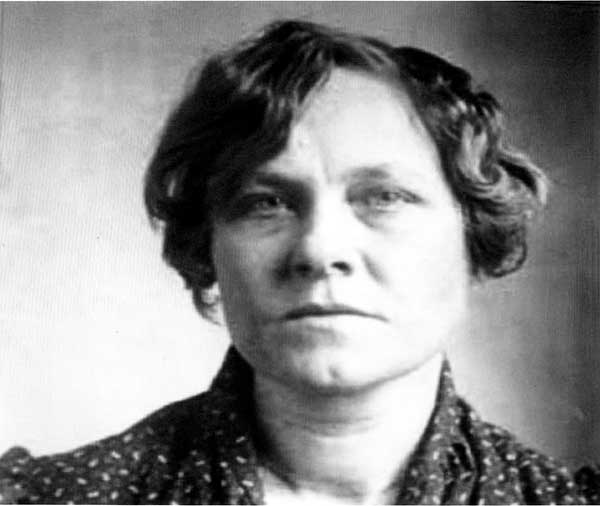
Sing Sing Prison — They led Ruth Brown Snyder from her steel cage tonight. Then the powerful guards thrust her irrevocably into the obscene, sprawling oaken arms of the ugly electric chair.
This was about 30 minutes ago. The memory of the crazy woman in her last agony as she struggled against the unholy embrace of the chair is yet too harrowing to permit a calm portrayal of the law’s ghastly ritual. Ruth was the first to die.
The formal destruction of the killers of poor, stolid, unemotional Albert Snyder in his rumpled sleep the night of March 20, 1927, was hardly less revolting than the crime itself. Both victims of the chair met their death trembling but bravely.
Each was killed by a sustained, long-drawn current that rose and fell at the discretion of the hawk-eyed State executioner, Robert Elliott. In Ruth’s case, he administered three distinct increases of current. For Judd, Elliott had two climactic electric increases.
Ruth entered the death chamber at 11:00. She was declared dead at 11:07. Less than three minutes after her limp body was freed from the chair, Gray entered — not wearing his glasses and rolling his unhandsome eyes rapidly from right to left and then upward. The current was applied to Gray at 11:10 o’clock. He was pronounced dead by Dr. C.C. Sweet, chief prison physician, at 11:14.
Brief as the time was for the state to slay Ruth and Judd, it seemed in retrospect to have been a long, haunting blur of bludgeoning horror—glazed eyes, saffron faces, fear-blanched, that became twisted masks; purpling underlips and hands as pale as chalk, clinching in the last paroxysms.
And as these woeful wrecks passed from life the shadows of attendants, greatly magnified, seemed to move in frantic array along the walls, the silhouettes nodding and prancing in a sepulchral minuet.
The football helmet, containing the upper electrode, was pressed to the skulls of Ruth and Judd, one after the other, in a manner suggesting a sordid coronation of the King and Queen of Horror. A passing noise emanating from the bodies of the current-paralyzed victims rose like a hideous hymn by a serpent choir. No regal incense for these wretched beings, but from the skull of each in turn there curled upward thin, spiral wisps of pale smoke where their scalps were seared by the killing flame.
As Ruth entered the room she responded to the prayer for the dying given her by the Rev. Father John T. McCaffrey.
Ruth’s voice, bereft of the maddening, hysterical scream that sometimes had risen from her throat in the condemned cell, now was high pitched, but soft in texture. It sometimes was the voice of a little girl — such a one as might be seen and heard during the Times Square rush hour, lost from her parents and among big, strange men.
In response to the prayer of the priest, who wore his black cassock and stood sadly over her, Ruth muttered parts of the responses, the last one being:
“Father, forgive them, for they know not what they do.”
The leather helmet was pressed to her blonde hair, a patch of which had been clipped to make a place for the electrode. Two matrons who had walked, one on either side of the woman, departed from the room before Elliot shot the hot blast into her once white, lovely body.
The matrons and Principal Keeper John J. Sheehy had stood before the pitiful woman to shield as much as possible her helpless form from the gaze of the witnesses. Ruth wore a brown smock of the sort stenographers and women clerks used in their office work. It had white imitation pearl buttons. She had on a short, washable black cotton skirt.
Ruth had black cotton stockings, the right one of which was rolled down to her ankle. On her feet were brown felt slippers. She wore blue bloomers.
“Jesus have mercy!” came the pitiful cry. Ruth’s blue eyes were red with much weeping. Her face was strangely old. The blonde bobbed hair, hanging in stringing bunches over her furrowed brow, seemed almost white with the years of toil and suffering as the six dazzling, high-powered lights illuminated every bit of her agonizing lineaments.
Ruth’s form seemed more slender than usual as she dragged her feet and groped with her hands.
“Father, forgive…”
The failing voice was interrupted. The holy litany was stopped short. No priestly ministrations could save her body now. Ruth’s felt-slippered feet were at the great abyss, her blanched face, only the lower part of which one could see, was chalky. She who had pleaded earlier in the day for life — just 24 hours more of it — seemed to have lived a thousand years and a thousand torments in the hellish prelude. Tightly corseted by the black leather bands, Ruth was flabby and futile as the blast struck her. It swept into her veins with an insidious buzz. Her body went forward as far as the restraining things would permit.
The tired form was taut. The body that once throbbed with the joy of her sordid bacchanals turned brick red as the current struck. Slowly, after half a minute of the death current, the exposed arms, right leg, throat and jaws, bleached out again.
Executioner Elliot, in his alcove, gazed as dourly as a gargoyle at the iron widow, who now had turned to putty. Then he shut off the current. Dr. Sweet stepped forward. He adjusted the stethoscope, exploring for any chance heartbeat. Ruth’s right hand had been clenched. The back of that hand rested flush against the chair. The forefinger and thumb were placed together, in the position of one who is holding a pinch of snuff.
As the current was opened, the hand slowly turned over in the wrist strap; the forefinger and thumb, which had been pointed upward, now were turned down.
All this time there had been a fizzing, whirling monotone. That was the only sound in the white-walled death chamber except the light rattle in the silvered steam pipes. Two attendants hastily donned white interns’ coats. A porcelain topped wheel stretcher, virtually a mobile operating table — which hitherto had been behind the chair was brought to Ruth’s feet. And now the small audience was nauseated by the repellent work the chair had done. One attendant screened Ruth’s legs with a towel. Water from the moist electrode was dripping down her right leg. As a guard removed the electrode it proved to have been a ghastly garter, one that scalded, branded and bit deeply.
A greenish purple blister the size of an eggplant had been raised on her well-formed calf. No mawkish sentiment could be expended on lady murderers, we are told, but somehow I did not think of what this woman had done but of what had been done to her. It was a fiendish spectacle as they lifted her to the white-topped table.
Shafer: Both the murder and the twin executions moved a lot of newspapers. New York Daily News photographer Tom Howard ignored the ban on cameras to snap a sneak pix of the murderess, Ruth Snyder, sizzling on the chair. Read all about the taking of the photo in the Smithsonian.
Two men hoisted her. Her arms hung limply. Her head had been burned. Her mouth, the purplish lips now as white as limestone, was agape in an idiotic grin. What a sorry gift the state had made to eternity.
No longer was Ruth trussed in only those oily black straps. One of those binders had seemed to press her ample bosom cruelly where once a baby daughter had nestled and found life. Another belt had imprisoned her waist. The humble folds of her cheap girlish smock had retreated vainly and formed puffy plaits under the rude familiarity of the chair’s embrace.
Ruth was a broken butterfly in a spider’s web. In looking back—back to the death of Ruth—the adjusting of the helmet, imagine a football helmet of regulation brand and a woman’s head as an instrument of death; I say, the adjustment of that dripping helmet was such a striking symbol of Ruth’s futile search for worldly joys through sin.
It spelled all that she had dared, suffered and paid in leaving her doll’s house instead, home-loving Queens Village. The helmet was death’s sorted millinery. No fluffy ribbons or bows or gaily-hued feathers so dear to the fun-loving Ruth.
Just a sneaky wire at the top of this hateful hat, a wire that coiled beside her and was ready to dart into the brain with searing fangs. They wheeled her out to the autopsy room. There were three minutes of mopping up, retesting the machinery. Warden Lawes stood sadly aside. Father McCaffrey, his head bowed, departed.
The chair Mollach of civilization in this year of enlightenment was yawning for another human sacrifice. Principal Keeper Sheehy left the room to summon the little corset salesman to his doom.
Everyone had expected Judd to die first. But at the final hour Warden Lawes moved Ruth to the last-minute cell only 20 paces from the chair chamber. Judd was shunted to the east wing and had to walk 160 feet.
Judd Gray met his death like a man. It is true he seemed horribly shaken. It is a fact that he was so moved by the enormity of the price he must pay that his voice could not be heard above a guttural, jumbled monotone. His lips framed the words, but the words died in his throat. It was the voice of a man being turned into a mummy-like catalepsy.
Judd, his roving eyes apparently seeing not before him, looked shabby in the full white light against the background of severely tailored medical men and uniformed guards. Yet there was in his bearing a sense of dignity incompatible with criminality and great disgraceful death. Judd came of good people and his breeding now told.
Yes, his dignity as he tried to repeat after the Protestant chaplain, Rev. Anthony Peterson, the phrases from the Sermon on the Mount, was impressive. One forgot his cheap, frowsy gray trousers and the grotesque, flapping right pants leg that had been split at the inner leg to receive the electrode. He had figured woolen socks of a mauve shade. The right one was rolled down over a brown felt slipper. His knitted long underwear of white buff color had the right leg rolled high above the knee. Gray’s leg was well-developed and evidenced his athletic days of tennis and quarterback on his school football eleven. Now he too wore a football helmet, just the sort he used to sport when directing the attack of his team.
“Blessed are the pure in heart,” intoned the chaplain.
Gray’s white lips moved. A deaf person would have understood the words by the lip-reading system. But only a cackling scramble of sound got past Gray’s rather boyish mouth. It seemed that Gray came into the death house supported by a religious ecstasy. His chaplain was wearing his gown as a doctor of divinity. He is a large, finally set up man with gray hair and a large kindly face.
Gray sought the eyes of his spiritual advisor, both when he walked into the chamber and before his eyes were masked. In walking Gray moved with leaden feet. At times he seemed to be treading on thorns and the two lines between his eyes and the top of his nose were black streaks in his ashen face. The face seemed to be fed by lukewarm water instead of blood.
Brisk and facile fingers of veteran guards, whose powerful hands displayed an astounding cunning, worked at Gray’s straps. The big hands manipulated the buckles and the spidery accouterments of death with the ease of a Paderewski ensnaring the notes of a rhapsody.
Gray had entered the room at 11:08 o’clock. At first he walked stiffly as if his knees were locked together. His steps were like those of a person trying to climb a steep hill. His chin, which had a deep cleft in it, was thrust forward and his nostrils were slightly distended.
There was evidence of a terrible inner strain, but there was not one whit of cowardice manifest in the march of the little corset salesman. His jaws were as yellowish white as saffron and his lately shaved beard still showed enough to lend shadows to his sunken jaws. But there was no saffron and no yellow in his backbone, no matter what his crime was or how brutal he may have been when he held a sashweight over stodgy, middle-aged Albert Snyder.
The doctors, Sweet and Kearney, watched in a detached way as the well-trained prison attendants proceeded to kill Judd in the name of the state. Elliot sent the short copper lover home. Judd, who had been sort of crumpled beneath his leather manacles, now shot forward and remained erect.
A blue spark flashed at the leg electrode. Soon his sock, not quite clear from the current as the water from the electrode dripped down his calf, was singed. Smoke came from the leg. Next the powerful pressure of the death stream singed his rather wavy dark brown hair. Smoke rose on either side of his head. For a moment he seemed a grotesque Buddha with votive incense pouring from his ears.
At the first electric torrent, Judd’s throat and jaw were swollen. The cords stood out. The skin was gorged with blood and was the color of a turkey gobbler’s waddles. Slowly this crimson tide subsided and left his face paler, but still showing splotches of red, which were mosaics of pain. The electricity was put on just as the chaplain got this far with his comforting words:
“For God so loved the world…”
Judd was not conscious, presumably, to hear the rest of the minister’s “that he gave his only begotten Son…”
Gray’s white shirt was open. When Elliot withdrew the lever of the switch, Dr. Sweet walked forward to search the chest of the night’s second victim for heart action. He found none. He said:
“I pronounced this man dead.”
The chair with its now lifeless burden still held the eyes of many a bewildering fascination. There were not a few, however, who covered their eyes. The men in white coats made their second trip with the wheeled stretcher. Judd did not know that he had been preceded in death by Ruth. They had not seen each other or exchanged notes since they first entered the death house eight months ago. Nor did the former lovers meet tonight in life.
Still these victims, who were known as No. 79892 (Ruth Snyder) and No. 79891 (Judd Gray) on the prison rolls, are again together in death. For their bodies, shrouded in white sheets, are in the prison morgue, a small room not fifty feet from the chair. This, then, was the end of the road, the close of their two years of stolen love. Their bodies are cut open as the first hour of a new day comes hazily over the town, prison and broad, half frozen river. Their skulls are opened by medical men, as in the stern letter of the law, and their brains are plucked therefrom by rubber gloved hands and are deftly turned this way and that for inspection beneath the bright prison lights.
It was an unhallowed spectacle, this reduction of a full-bodied woman of thirty-three years to a limp and blubbery cadaver. It was fearful to see a man cooked in the chair. The twenty-four invited witnesses filed out of the death house. Warden Lawes’ secretary, Clement J. Ferley, signed the death certificates.


Like this story?
Subscribe to our free newsletter for more great reads in your inbox every Sunday.
A last-minute move on the part of Ruth’s mother, Josephine Brown, and her brother, Andrew, failed to prevent the autopsy that is being performed as this is written. An order was served on Warden Lawes forbidding the prison physician to make a surgical incision in Ruth’s body. On advice of Attorney General Ottinger, Warden Lawes did not obey the order.
No opiates and no sedatives were administered to either of the pair tonight, Warden Lawes said. They ate somewhat heartily of a last dinner of roast chicken, soup, coffee, celery and mashed potatoes. Gray, in ordering his meal, had underlined his written request for “good coffee.” As he handed it to the guard, Gray said: “And I mean good coffee.”
No typewriters and no telegraph wires were permitted in the penitentiary. Immediately after the reporters left the now empty, gasping, greedy chair — which seemed to clamor for still other human sacrifice and dash they dashed awaiting automobiles and through the tall iron gates. About a thousand persons were massed as close to the prison as the guards would permit. Through a long gauntlet of watchers, who stood anxiously to hear if Ruth and Judd had gone, roared the press cars.
The stories are now being finished in a cramped and crowded backroom of a soft drink establishment, which has an old-time bar running the length of the front room, and where the air is thick with tobacco. Then, as the morning comes on, leaving at night the thinning shadows like ghosts departing, the fading click of typewriters comes with less rattle and the buzz of telegraph instruments, too, is subsiding.
Then the calm realization that the law had been obeyed and society advenged, and that the chair remains to jerk and rip and tear and burn those who slay. Then to bed for nightmares to distort your scrambled dreams.
The bodies of Gray and Mrs. Snyder will be released to relatives at 9 o’clock in the morning. Ruth’s body will be claimed by her mother, Mrs. Josephine Brown. Judd’s mother, Mrs. Margaret Gray, will claim his.

Gene Fowler
Gene Fowler, born Eugene Devlan, (1890-1960) launched his career at The Denver Post, later working for the the New York Daily Mirror, New York Evening Journal, the New York American and The Morning Telegraph.
Fowler eventually moved his journalistic talents to Hollywood, where he became a fabled screenwriter. When your stomach settles, track down his novelization of the murder story, Trumpet in the Dust, and his
memoir, Skyline. Fowler’s literary formula still inspires. “The best way to become a successful
writer is to read good writing, remember it, and then forget where you remember it from,” he
said.
Leave a Reply
You must be logged in to post a comment.