
To find her latest narrative story for The Washington Post, a piece called “Ripples of hate,” enterprise reporter Ruby Cramer looked within her own neighborhood.
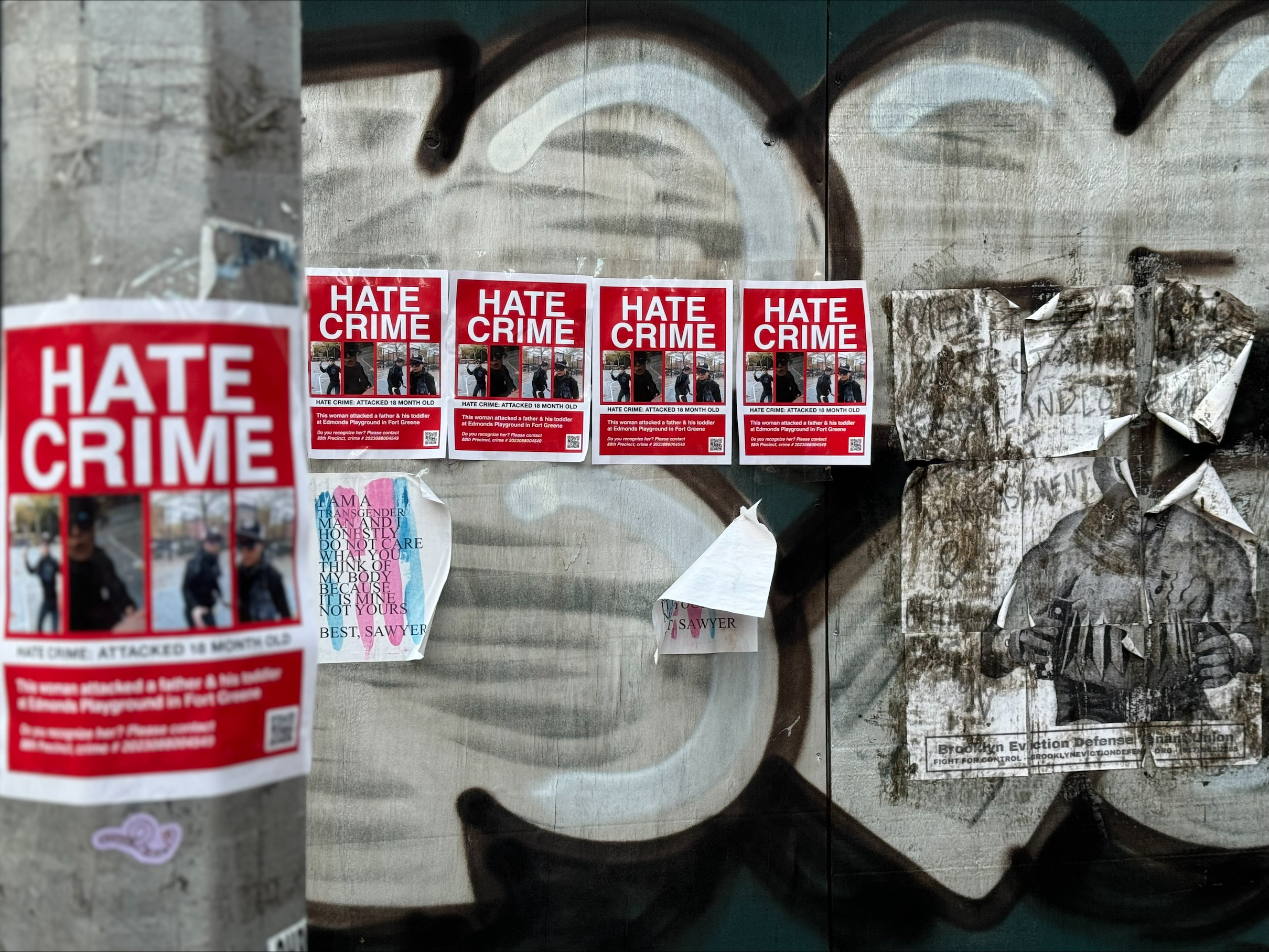
Cramer, who joined The Post in 2022, happened to be walking her dog in Brooklyn one day when she spotted the bright-red signs: “HATE CRIME,” they read in all capital letters, above four photos of a then-unidentified woman. “ATTACKED 18 MONTH OLD.”

Cramer reached out to the toddler’s father, 40-year-old Ashish Prashar, and they talked on the phone about what had happened. “I didn’t really know what I had in mind,” she said. “I certainly didn’t envision a 5,000-word story.”
Over the next several weeks, Cramer met with Prashar on more than a dozen different occasions to report “Ripples of hate,” sometimes spending full days with him. Her in-depth story follows Prashar, first as he and his young son were accosted, verbally and physically, by an unknown woman at a playground (at the time he was wearing a keffiyeh, a Palestinian scarf, though he is not Palestinian). Prashar posted a brief video of the incident on social media, where online sleuths immediately got to work trying to identify the woman. In the process, an unrelated woman, Annette Lalic, was misidentified as the assailant and strangers send her waves of threats.
“I was looking for a human entry point into the way that the [Israel-Gaza] war has been met with so much hurt, so much anger, so much outrage on all sides,” Cramer said.
Cramer’s story became one of The Sunday Long Read’s most-read stories of the week.

Before she joined the Post, where she writes narratives about the people in and around politics, Cramer covered the same beat at Politico Magazine and BuzzFeed News. She grew up on the Eastern Shore of Maryland and lives in New York.
The following interview has been lightly edited for brevity and clarity.
At the Post, you write features that tie into the political landscape in some way. Can you talk through how you decide which stories to take on, and which political issues to bite into?
It’s funny, because I’m in the middle of trying to figure out my next story right now. So your question is sort of tapping into my state of anxiety over that process. I think when I first came up to the Post, I was doing more straightforward political profiles, so picking someone who was a great character whose story hadn’t been told in a definitive way. Even with those stories, I was still looking to not just do a straight profile, but capture something more human and more general about the moment that we’re living through in America.
I think now I’m trying to figure out the realities and the costs and human stories that are part of the current American political moment. Whether that’s a librarian in Florida, who’s seen her non-political job suddenly become political, or in the case of this last story, how the Israel-Gaza war is reaching communities and families on an individual level in a rise of hate crimes.
So it’s about making the political personal in some way?
Yes, making the political as human as possible. And telling stories in a humane way about the people at the center of politics, but also people on the periphery of it, who aren’t involved directly but are seeing their lives being shaped by it.
You’ve been covering politics for different outlets for more than a decade. Have you seen the beat change over that time?
Oh my gosh, yes. It’s hard to count all the ways in which it has changed. It’s increasingly hard to tell human stories about politics. The access that you can get to the people at the very center of politics is not what it used to be, even compared to just 10 years ago. But I think more than that, even just asking a normal person to trust a reporter or writer with their story — the bar is so much higher. I’m amazed every time anyone says yes, because it’s so much easier to say no. When you say yes, you’re opening yourself up to so much online vitriol. And you’re putting your story out there in a world that’s, you know, not just divided but dangerous. So I think it’s more important than ever that people do say yes, but I’m increasingly grateful when they do because I know how hard it is.
[“Ripples of hate”] is a fascinating story in that it’s murky: Ash posted a video of this situation, and then by posting the video seemed to spur action that maybe otherwise wouldn’t have happened. But then also there was a level of rage that he couldn’t really control at a certain point. Do you think that readers will take away anything specific from this telling, in that things aren’t necessarily black and white?
I think the story leaves room for people to understand the complexity with which Ash felt about the entire situation: the decision to post the video, the fact that an innocent woman got swept up in it. He himself wonders, ‘Should I have done more? Should I have reached out to Annette?’ I don’t think at any point he wondered, ‘Should I have posted the video?’ because I never heard him express any doubt about that. But I liked that the story leaves room for readers to wonder if that was the right thing to do, and wonder how they would have acted. Ash says at one point in the story, ‘You don’t know until you’re in the situation what you would do.’ I think he’s right.
I was struck while reading this by the level of detail that you included in conversations between people. I’m curious how you achieved that in your reporting process.
Everything that you read in the story between Ash and Mary I was present for. That just comes from a level of sticking around for enough hours and for enough days, until they can sort of forget that you’re there. So I was able to witness some intimate moments and personal moments between them that hopefully speak to the difficult situation they were trying to figure out how to navigate.
I don’t want to overstay my welcome, and sometimes you can start to feel a little bit like an invasive species. But it’s a conversation I want to have at the beginning [of the reporting process] because I want to be upfront, and I don’t want anyone to ever feel like, ‘Wait a second, this is more than I bargained for.’ At the same time, when you’re first starting out on a story, you don’t really know what it’s going to turn into, or how much time you’re going to need to spend with a subject. Maybe you could do the story with just having spent one day with someone, maybe it requires weeks.
Often the best non-fiction reads like fiction. I was going to ask how you balance the color of a story with the factual backbone, but it sounds like your depth of reporting, especially in this situation, helps to do that.
I love to try to achieve non-fiction that reads like fiction; I mostly only read fiction. I think there’s only one way to do it, and that’s by having as much, and as high-quality, reporting as you can. And to get that, you need time.
The structure of this story feels conversational, almost; it blends really well with the conversations that are actually happening in the story. Was there a moment in time where you realized that this kind of structure would work?
I think this structure really came into place once I’ve figured out that Annette would be one of the central characters. I liked having the story begin with this really simple action, which is a father taking his son to the playground. Then it obviously morphs very quickly into a very different kind of moment. And from there, we wanted the story to build, basically layer upon layer. And then the piece ends back at that very simple note, which is a family taking their kid to the playground. That was the idea for the structure, and it all builds from that very brief encounter at the playground.
What is the overall reaction that you’ve gotten from readers, especially with this story that has these political themes to it?
The response has been really thoughtful. I’ve gotten a lot of emails that are reflective, people offering their own opinions about how they think they might have acted. I was a little worried because people have extremely strong opinions and views about what’s happening overseas, understandably, so anything that touches that is going to elicit a strong response in return. But I was relieved to see how thoughtful and measured people were in responding to the story.
Compiled by Amanda Ulrich. Photos courtesy of Ruby Cramer.
Leave a Reply
You must be logged in to post a comment.