
Whenever Peter Holley, a contributor and senior editor at Texas Monthly, sets out to find his next story, he doesn’t limit himself to any particular topic. Instead, he says: “I let my curiosity lead me.”
“I feel like the best work comes out of sincere curiosity and passion,” he told The Sunday Long Read. “And any time you’re trying to do a topic that you’re not deeply invested in, it’s going to manifest in the final product.”

That creative process has led to many of Holley’s recent pieces: from stories about a pastor who used ChatGPT to write his Sunday service, to the plight of barbeque pitmasters during climate change-fueled heat waves.
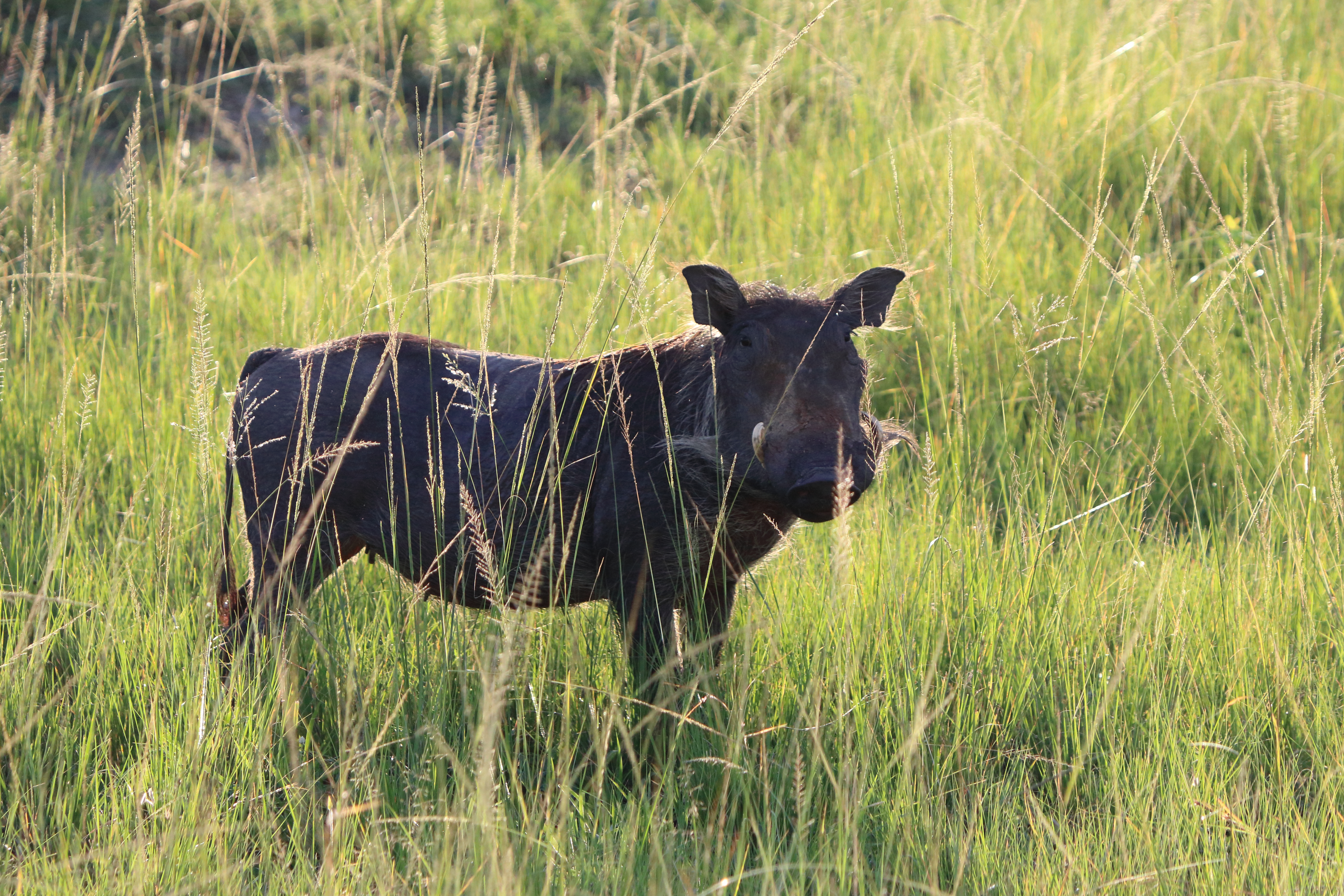
One piece in particular — which describes Texan Austin Riley’s fight for survival when his pet warthog, a 250-pound animal named Waylon, nearly kills him — was one of The SLR’s most popular stories of the week.
But finding that story happened almost by chance. Holley was in the midst of doing research for a different article when he came across a single comment from Austin on Instagram about the brutal attack. Holley reached out, thinking that Austin might make a good source for his other piece. But the journalist quickly realized that Austin’s complex tale about life, death, and betrayal was too compelling not to be the main act.
“I’m not exaggerating when I tell you that within three minutes of talking to him on the phone, I said, ‘Okay, stop talking. I don’t want to hear any more of this until I can meet you in person, because this is too compelling,’” Holley said.

Before joining Texas Monthly, Holley was a staff writer at The Washington Post, where he reported on breaking national and international news. He has also reported from Afghanistan and Iraq and spent a year working for an English-language newspaper in Lahore, Pakistan. He holds a master’s degree in journalism from Columbia University, and is a seventh-generation Texan and a native Austinite.
The following interview has been lightly edited for brevity and clarity.
Can you give a brief overview of your career and how you ended up back in Texas?
I started my career right after college at a tiny newspaper in Maryland. I was doing the cops beat and the overnight shift, you know, police blotter stuff. From there, I ended up going to get a master’s degree at Columbia in journalism, which wasn’t particularly useful, but it was kind of eye-opening in that I felt like I was good enough to keep pursuing this as a career path.
From there, I moved abroad. I was really curious about foreign correspondence and worked in Pakistan for a year, and ended up being an editor at an English-language newspaper there. I was actually fired from the newspaper because I accidentally put an offensive image in the newspaper, and the Taliban threatened our office with a bomb threat, so they let me go. It’s kind of a strange and unsettling point in my career. But I had the opportunity to just travel around the country and do some freelancing.
I ended up going back to the States, and getting a job in San Antonio as a crime reporter, and then I went to the Houston Chronicle and worked in features. I was also part of a team that launched a city magazine in Houston. From there I landed at The Post, and I was on a team that was started in 2012 or 2013 to figure out how to harness web traffic, to drive traffic to the homepage. And that was a really valuable exercise, because you end up writing sometimes several thousands words a day on various topics. You get really good at feeling intuitively what’s going to make a story resonate with readers on a mass scale.
My passion has always been in connecting with people in public and in the field, and feeling the emotional content of stories. When Texas Monthly had an opening, I decided to come home. I knew it would probably give me a chance to go deep into stories and learn how to do longform.
In journalism, oftentimes there’s that constraint of having to tie a story to a specific news peg, or to current events in some way. But this story about Austin and his warthog was more of a human, in-depth story about one man and his near-death experience. Why do you think it’s important to tell a story that stands outside of the news cycle in that way?
I think about that a lot. I’m constantly aware of the news cycle. And most of my work has been tied to the news cycle. But you can tell the audience is fatigued by the news cycle. I mean, all of us are — it’s been almost a decade now of constant notifications on our phone, and I think we’re all exhausted. Noticing that has led me to try to pivot to find stories that tap more into universal themes, universal questions that we’re all curious about.
Initially, I thought this seemed like a story about a fight for survival, and fights for survival are always fascinating. And then as I dove deeper into the story, I realized that there are these other themes: about tragedy, about a life-long relationship with animals, and about this person having this lingering debate within themselves about betrayal.
I think many readers simply like to read good stories, and that they’re not focused on the nut graf and the news peg — they’re just thinking about what the story is, and who the characters are and how it relates to them.
Absolutely. And other mediums know that, cinema knows that. A lot of social media content does really well because it’s tapping into just general interest curiosity. But it seems like journalism is stuck in a kind of formulaic approach to storytelling, which is really limiting as formats change. We need to evolve, in my opinion.
Do you think there’s going to be that shift in journalism to focus more on these purely human stories?
That’s a case I’ve been making for a couple decades now, somewhat unsuccessfully. But I think we need to re-evaluate as journalists what it is that we’re competing with in the online public square. So we have to really lean into what we do best, which is telling really good human stories. That’s the only way we can compete with the huge amount of content out there that is just hitting people all the time.
When you first met Austin, did you meet in some sort of neutral location? Or did you meet out in the pen on the farm where the attack with Waylon happened?
We just went right to the farm, right to the pen. I was a little bit worried because of his initial description over the phone of what had happened to him. It was heinous; it was so gory and morbid and uncomfortable. I was worried I was going to re-trigger him by taking him back to that place. As it turned out, he’d had enough therapy over the last six months that he was more comfortable spending time in that environment. And as soon as we got there, he walked me through it.
I asked him pretty much every time we talked, “Are you OK with talking about this again?” Because we probably had several dozen conversations over the phone and over text. He told me at one point in the process that it was becoming a cathartic experience for him to talk about it. Then I felt like, okay, this wasn’t going to harm him, and in the long run could actually help him come to terms with what happened.
When did Austin start talking about the serious medical issues he experienced growing up, and the fact that this was not his only near-death experience?
It’s funny, that actually came up in our first meeting at the warthog pen. I didn’t really know what to make of it at the time. I think I was so engrossed in the life-or-death struggle with the animal that I kind of glossed over the context. Then I couldn’t quite figure out how to incorporate that into the story. It was like, “What is this story? Is it a story about a guy who just keeps having horrible luck and overcoming it?” At one point, I thought that maybe this wasn’t fully a story, maybe this was a one-note, bizarre experience.
When I was finally recounting the story to a colleague, he said, “Stop, say what you just said again.” And I had been talking about the feeling of betrayal that Austin felt with Waylon the warthog. This story is about betrayal. It’s a betrayal story, wrapped up in a survival story, wrapped up in a tragedy. It’s got multiple threads. But I didn’t realize that I would need other people to kind of reflect back to me what I was experiencing. I was too emotionally invested, I couldn’t see it. I was too in the weeds.
What did you take away from this story about wild or non-domesticated animals, and why people choose to be in close proximity to them?
I think I’m still wrestling with that question. In Austin’s case, that was something I focused on a lot. The conclusion I came to with him was that animals were the way that he was able to experience the world more fully when he was battling his brain tumors. So they became an outlet. But I know, as somebody who’s spent a lot of time on the East Coast and has spent time outside of Texas, Austin’s lifestyle probably sounds more unusual to some than it would to people in this region. There’s obviously a really clear independent streak in Texans, and there’s a lot of livestock around.
If you go out into the Texas Hill Country — and that’s where this is set, which is outside Austin by about an hour — there are exotic animals and ranches all over the place. And they’re really prized among hunters and people who breed them. It’s a major industry, it’s a controversial industry. But in this setting, it’s not that unusual to think that somebody might form a bond with one of these animals that goes awry.
Compiled by Amanda Ulrich. Photos courtesy of Peter Holley and Nigel Hoult/Creative Commons via Flickr.
Leave a Reply
You must be logged in to post a comment.