
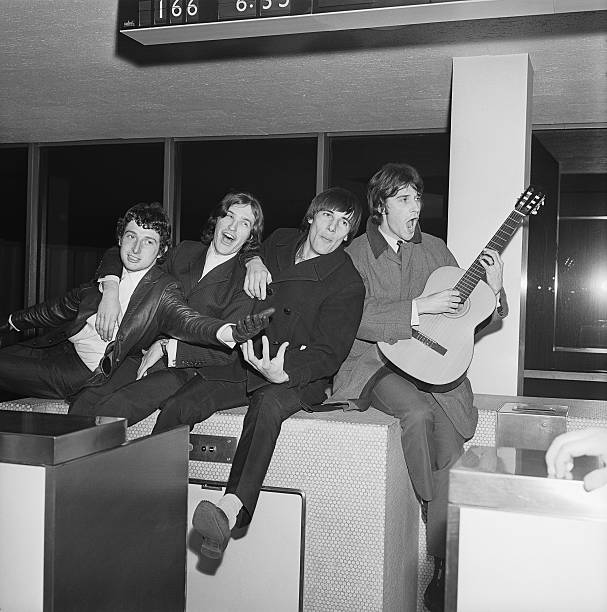
In a new episode of our Behind the Story series, host and journalist Amanda Ulrich chats with The Washington Post’s Geoff Edgers about everything music and pop culture — from Edgers’ recent story about a group of diehard Kinks fans, to his approach to interviewing celebrities like Tiffany Haddish and the late Norm Macdonald.
His biggest reporting tips? Don’t be afraid to reach out to big names for an interview (repeatedly) and then spend as much time with them as possible.
The following highlights, taken from that conversation, have been edited for brevity and clarity.
Listen to the full podcast episode on Spotify or Apple podcasts.

Amanda Ulrich: You wrote a recent article that we featured in the newsletter, which talked about this group of superfans of the Kinks, the rock band from the ’60s. So just to start off, where did this interest in the Kinks start for you personally?
Geoff Edgers: I have a weird entry point, which is in like 2008 — when I thought I was going through a midlife crisis, but I was only like 35 — I made a movie about the Kinks. You can find the clip of that movie on YouTube. It’s called “Do It Again.” I love the Beatles, I love the Stones and I love the Who, but to me the great British band that never got enough credit was the Kinks. And they were special to me because while these other groups were kind of writing about girls, basically, the Kinks were writing about social issues, but not really in a way that sounds so serious. They were writing about being jealous of this kid in their school or, you know, living in a pretty hard place and wondering how to get out. They wrote amazing stories about how screwed up the music industry was. And they were just like a little off-kilter.
We eventually made a film. It played at film festivals, it got onto PBS, and it was great and exciting. I lost a little money, but it was like a great adventure, and something I’d never done before, and it opened my world up to how to tell stories in a different way.


Like this story?
Subscribe to our free newsletter for more great reads in your inbox every Sunday.
So in this story, you talk about this group of diehard fans of the Kinks. What do you think, in general, superfans get out of this fandom? What’s the goal for them? What are they getting out of it?
I don’t want to sound like a cliche and say, “This is community.” But I noticed an interesting thing over the last year, or the last couple years. I did a big story on Geddy Lee, the lead singer of Rush, and he wrote this fantastic memoir and asked me to moderate [a book reading]. And Geddy sold out the Orpheum Theatre in Boston for it, I think it’s like 3,000 seats. You come in and you get a book, and then you sit and he does a reading or whatever he wants to do. He didn’t play any music. But what I thought was really interesting is that Rush is gone; when Neil Peart died a few years ago, it just ended the band. And yet when these people came in, I’ve never dealt with a crowd that was easier. I was real nervous, like what do I do for jokes? What do I do for introductions?
But as soon as I said the first word, people were laughing. They were so happy. And I realized these people are like in the wilderness, and they’re desperate for that communal feeling that they got for years and years with this group. And if they can get just a taste of it, they’ll go for it.
How do you think the fandom of huge artists has changed over the decades? You briefly mentioned in your story the superfans of Taylor Swift and Beyoncé. But do you think that super-fandom has changed? What does that look like now, especially with the internet?
I don’t know what happens with Beyoncé, or Taylor Swift, obsessive fans — maybe they win a contest and get to meet her, but I don’t think so. What’s interesting to me about the superfans of the past is they would meet their heroes, and sometimes they would hang out with them, and sometimes they would go to dinner with them.
A lot of the [modern-day] artists have also cut [the media] out, and so they feel like they have a direct line of communication to their fans, you know? A lot of these artists have kind of cut out the middle person. Sometimes you’ll see an artist comment on somebody’s comment on their [social media posts], but I think it’s kind of a one-way relationship. Actually, I don’t really think that these people have gotten closer, I think they’ve gotten farther apart — they’ve been separated by technology.
You’ve also done this “Edge of Fame” podcast, where you’ve talked with people like Norm Macdonald, which is amazing. Is there anything you’ve discerned about how famous people act in a more neutral setting, when they’re not performing?
What I believe is that everybody, doesn’t matter if you’re famous or not, wants to be understood, and wants to be given attention. We’re ego-driven people, and you want to be given attention and credit for the things that you feel like you deserve. And so I think what’s happened is the way that things are done now — and there’s some great profile writers and people who do amazing stories — but I think what’s happened is we’ll often do a quick Q&A in a hotel lobby before a show, or before a film comes out, or before a TV show comes out, or whatever. I think we’ve gotten away from the process of understanding what makes someone really tick, and what drives them to do something or make something. And so I think those famous people really want to be taken seriously.
So when you’re doing a story and you’re digging into things that aren’t normally dug into, I think they start to appreciate it.
Compiled by Amanda Ulrich. Photo of the Kinks from Cyrus Andrews/Hit Parader magazine/Creative Commons via Wikimedia.
Leave a Reply
You must be logged in to post a comment.